
Mostrando entradas con la etiqueta CULTURA. Mostrar todas las entradas
Mostrando entradas con la etiqueta CULTURA. Mostrar todas las entradas
miércoles, 11 de febrero de 2015


lunes, 13 de octubre de 2014
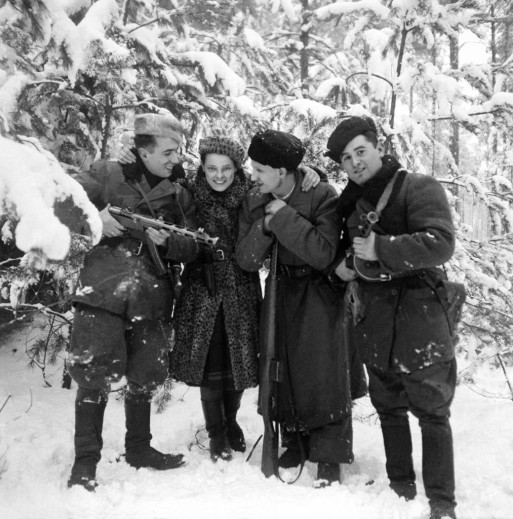
Combatientes bielorusos judíos
- En colaboración con la Fundación judía partisana para la Educación, la conocida Charach Galería Janice en West Bloomfield presentará "Imágenes de la resistencia: Las fotografías de la judía partisana de guerra Faye Schulman" de 10 19 hasta 12 14.

viernes, 10 de octubre de 2014
Un muy simbólico Premio Nobel de la Paz

PREMIO NOBEL DE LA PAZ 2014 COMPARTIDO Y MERECIDO:
El hindú Kallash Satyarthi y la palistaní Malala Yousafzai ,ganadores por su contribución a los derechos de los niños.
lunes, 22 de septiembre de 2014

domingo, 21 de septiembre de 2014
Let’s play: Are you an anti-Semite?
This graphic/flowchart on antisemitism, created by A.B. Landis, is being circulated on social media sites such as Twitter, Facebook and Imgur, and we thought it was definitely worth sharing. (Click graphic below to go to the original image at Imgur, and then click again to enlarge.)

Dos. Elegías de Duino

Todo ángel es terrible. Y sin embargo, ay, los invoco
a ustedes, casi mortíferos pájaros del alma, sé quiénes
son ustedes. Los días de Tobías, ¿dónde quedaron?,
cuando uno de los más radiantes apareció en el umbral
sencillo de la casa un poco disfrazado para el viaje,
ya no tremendo (muchacho para el muchacho,
que se asomó, curioso). Si ahora avanzara el arcángel,
el peligroso, desde atrás de las estrellas, un solo paso,
que bajara y se acercara: el propio corazón, batiendo
alto, nos mataría. ¿Quién es usted?
Tempranos afortunados, ustedes, los mimados
de la creación, cadena de cumbres, cordillera roja
del amanecer de todo lo creado -polen de la divinidad
floreciente, coyunturas de la luz, corredores,
escalones, tronos, espacios del ser, escudos
deliciosos, tumultos del sentimiento tormentosamente
arrebatado, y de pronto, individualizados, espejos,
ustedes, los que recogen nuevamente en sus propios
rostros, la propia belleza que han irradiado...
Rainer María Rilke
(Praga, 1875 - Suiza, 1926)
Dalai Lama

Matar a los demás es inaceptable. La yijad debería de ser luchar contra nuestros sentimientos, interiores, destructivos. Yijad no es hacer mal a los otros.
Reunión de dirigentes religiosos de Bombay, 2014.
miércoles, 17 de septiembre de 2014
l. LAS ELEGÍAS DE DUINO. RILKE.
(Mar Muerto.Israel)

¿Quién, si yo gritara, me escucharía entre las órdenes
angélicas? Y aun si de repente algún ángel
me apretara contra su corazón, me suprimiría
su existencia más fuerte. Pues la belleza no es nada
sino el principio de lo terrible, lo que somos apenas capaces
de soportar, lo que sólo admiramos porque serenamente
desdeña destrozarnos. Todo ángel es terrible.
Así que me contengo, y me ahogo el clamor de la garganta
tenebrosa. Ay, ¿quién de veras podría ayudarnos? No
los ángeles, no los hombres, y ya saben los astutos
animales que no nos sentimos muy seguros en casa,
dentro del mundo interpretado. Nos queda quizás
algún árbol en la loma, al cual mirar todos los días;
nos queda la calle de ayer y la demorada lealtad
de una costumbre, a la que le gustamos, y permaneció,
y no se fue. Oh, y la noche, y la noche, cuando el viento
lleno de espacio cósmico nos roe la cara:
¿Para quién no permanecería aquélla, la anhelada,
la tierna desengañadora, ahí, dolorosamente próxima
al corazón solitario? ¿Es más suave con los amantes?
Ay, ellos sólo se ocultan uno a otro su suerte.
¿Todavía no lo sabes? Arroja el espacio que abarquen
tus brazos hacia los espacios que respiramos; quizá
los pájaros sientan el aire ensanchado con un vuelo
más íntimo...
martes, 2 de septiembre de 2014
miércoles, 20 de agosto de 2014
JORGE LUIS BORGES
Poema
Israel,1969
Temí que en Israel acecharía
con dulzura insidiosa
la nostalgia que las diásporas seculares
acumularon como un triste tesoro
en las ciudades del infiel, en las juderías,
en los ocasos de la estepa, en los sueños,
la nostalgia de aquellos que te anhelaron,
Jerusalén, junto a las aguas de Babilonia,
¿Qué otra cosa eras, Israel, sino esa nostalgia,
sino esa voluntad de salvar,
entre las inconstantes formas del tiempo,
tu viejo libro mágico, tus liturgias,
tu soledad con Dios?
No así. La más antigua de las naciones
es también la más joven.
No has tentado a los nombres con jardines,
con el oro y su tedio
sino con el rigor, tierra última.
Israel les ha dicho sin palabras:
olvidarás quién eres.
Olvidarás al otro que dejaste.
Olvidarás quién fuiste en las tierras
que te dieron sus tardes y sus mañanas
y a las que no darás tu nostalgia.
Olvidarás la lengua de tus padres y aprenderás la lengua del Paraíso.
Serás un israelí, serás un soldado.
Edificarás la patria con ciénagas: la levantarás con desiertos.
Trabajará contigo tu hermano, cuya cara no has visto nunca.
Una sola cosa te prometemos:tu puesto en la batalla.
lunes, 18 de agosto de 2014
FIGHT DEFAMATION WITH IMAGES Pierre Rehov
Source :https://www.indiegogo.com/projects/...
One image is worth 1000 words. Help spread the truth about Israel.
One image is worth 1000 words. Help spread the truth about Israel.
sábado, 16 de agosto de 2014
Gatestone Institute
(Britain’s « Murky Anti-Semitic Subculture »
Declaración de mehmet Görrmez en Al Arabiya
una media de 1.000 musulmanes son muertos cada día , el 90% son muertos por manos de sus hermanos musulmanes.
Gatestone Institute (Britain’s « Murky Anti-Semitic Subculture »)
son cifras para 4 DÍAS de los muertos ,por los islamistas,en los ultimos 10 AÑOS en la guerra israelo-palestina.

...Mehmet Gormez, head of Turkey's Religious Affairs Directorate, recently claimed that around the world each day an average of 1,000 Muslims are killed – of which, he declared, "Almost 90 percent…are killed by other Muslims, by their brothers."
Or, to put it in another context, if the figure is accurate, every four days, Islamists murder more Muslims than those who have died in the last ten years of the Israeli-Palestinian conflict.
viernes, 15 de agosto de 2014


jueves, 14 de agosto de 2014
Johnny Depp pronto de buscador de fortunas de los nazis
MORTDERCAI.
Acompañado de Gwyneth Paltrowy Ewan McGregor.
En pantalla en febrero próximo-
martes, 12 de agosto de 2014
2º premio de fotografía de National Geographic
Jerusalem, Mea Shearim. Matrimonio de Aaron y Ribkkah , obra de la polaca AgnieszkaTraczewska

sábado, 9 de agosto de 2014
Lettre ouverte à un ami français- pour la francophonie
Yaël, le 28 juillet 2014
Lettre ouverte à un ami français
Je suis venue te dire que je m’en vais
Ma valise est bouclée,
Mes affaires sont réglées
Et je pars sans me retourner
Comme dit si bien Verlaine au vent mauvais
Je suis venue te dire que je m’en vais.
Ma valise est bouclée,
Mes affaires sont réglées
Et je pars sans me retourner
Comme dit si bien Verlaine au vent mauvais
Je suis venue te dire que je m’en vais.
jueves, 7 de agosto de 2014
Noticias de Arte
Tomer Peretz (born July 5, 1982) is a Los Angeles-based artist and designer. His time spent serving as a soldier and officer in the Israel Defense Forces gave him the opportunity to create vivid and expressive works from a personal vantage. (Wikipedia)

Premio Arthur Szyk , de arte sionista, para el artista de Jerusalem M. Tomer Peretz. El anador recibe la suma , módica, de 1000 $.

lunes, 28 de julio de 2014
Noticias
Gal Gadot ,artista mundialmente famosa, recibe insultos por orar, encendiendo las velas de Shabat con su niña, por los soldados de Israel.
Su página ,seguida por 5 millones de personas, ha recibido más de 2000 comentarios que le insultan y acompañan con fotos meando la bandera de Israel y obscenidades, incontables , de mal gusto.
by:

השחקנית הבינלאומית לא ציפתה לקבל מאות תגובות נאצה על פוסט שהעלתה בפייסבוק, בו כתבה כי היא מתפללת לשלום תושבי ישראל. "תתביישי לך גל, אתם הורגים יותר מ-800 חפים מפשע", כתבו גולשים
בדף הפייסבוק שלה, שבו נראתה מדליקה נרות שבת עם בתה ומתפללת לשלום תושבי ישראל
חיילי צה"ל. לדף הפייסבוק של גל גדות יש כ-5.7 מיליון עוקביםi

בדבריה איחלה גדות "אהבה ותפילות לאזרחי ישראל, ובמיוחד לנערים ולנערות המסכנים את חייהם כדי להגן על ארצי אל מול הפעולות הנוראיות שמבצעים אנשי חמאס שמסתתרים כפחדנים מאחורי נשים ילדים. אנחנו נתגבר, שבת שלום".
גדות אמנם קיבלה (נכון למועד פרסום הידיעה) כ-40 אלף לייקים וכ-700 שיתופים, אבל גם 2,500 תגובות מתוכן מאות תגובות נאצה. בין השאר כתבו גולשים בתגובה: "תתביישי לך גל, אתם הורגים יותר מ-800 חפים מפשע בעזה בדרך שבה אתם מגינים על מדינתכם".
עוד כתבו לה בתגובה: "למה אתם לא עוקפים את הנשים והילדים שהם 'כביכול' משתמשים בהם בשביל להרוג את המחבלים". כמו כן צורפו לתגובות צילומים של שריפת דגלי ישראל, של ילד המטיל מימיו על דגל ישראל, ועוד.
הכוכבת הישראלית ממוקמת במקום ה-39 והמכובד ברשימת הנשים הסקסיות בעולם, והיא צפויה לשחק בשלושה סרטי וונדרוומן שייצאו לאקרנים בקרוב. לפני כן שיחקה גדות בכמה סרטים בסדרה "מהיר ועצבני" וסרטים נוספים בהוליווד. מלבד זאת, גדות נחשבת לאחת הדוגמניות העסוקות ביותר בעולם בכלל, ובישראל בפר
lunes, 21 de julio de 2014
Escenas escolares de la muy cultaaaaaaaaaaaaa Gaza
Alumno que no quiere ir al colegio de Hamas:

Alumno normal de Hamas:

Alumno muy precoz y aventajado:

Alumno normal de Hamas:
Alumno muy precoz y aventajado:

sábado, 19 de julio de 2014
ISRAEL ES UNA AFRENTA CONTRA EL ISLAM , SU HONOR Y SU VIRILIDAD, SEGÚN SU CULTURA.
"The threat to Arab honor did not come from a worthy foe, like the Western Christians, but by from Jews, traditionally the most passive, abject, cowardly of the populations over which Muslims ruled. [...] the prospect of an independent state of should-be dhimmis struck Arab leaders as more than humiliating. It endangered all Islam. Thus Rahman Azzam Pasha, the head of the newly formed Arab League, spoke for his “honor group” when he threatened that “if the Zionists dare establish a state, the massacres we would unleash would dwarf anything which Genghis Khan and Hitler perpetrated.” As the Armenians had discovered a generation earlier, the mere suspicion of rebellion could engender massacres. [...] The loss in 1948, therefore, constituted the most catastrophic possible outcome for this honor-group: Seven Arab armies, representing the honor of hundreds of thousands of Arabs (and Muslims), were defeated by less than a million Jews, the surviving remnant of the most devastating and efficient genocide in history. To fall to people so low on the scale that it is dishonorable even to fight them—nothing could be more devastating. And this humiliating event occurred on center stage of the new postwar global community, before whom the Arab league representatives had openly bragged about their upcoming slaughters. In the history of a global public, never has any single and so huge a group suffered so much dishonor and shame in the eyes of so great an audience."
Pour comprendre le rejet d'Israël par les Arabes il faut essayer de comprendre dans quel cadre mental ils opèrent. C'est ce qu'a entrepris Richard Landes.
Why the Arab World Is Lost in an Emotional Nakba, and How We Keep It There. By ignoring the honor-shame dynamic in Arab political culture, is the West keeping itself from making headway toward peace? @ Tablet, par le Prof. Richard Landes
Pour comprendre le rejet d'Israël par les Arabes il faut essayer de comprendre dans quel cadre mental ils opèrent. C'est ce qu'a entrepris Richard Landes.
 |
| Enfant embrigadé par le Hamas |
[...] Arab political culture, to take one example—despite some liberal voices, despite noble dissidents—tends to favor ascendancy through aggression, the politics of the “strong horse,” and the application of “Hama rules”—which all combine to produce a Middle East caught between prison and anarchy, between Sisi’s Egypt and al-Assad’s Syria. Our inability, however well-meaning, to discuss the role of honor-shame dynamics in the making of this political culture poses a dilemma: By keeping silent, we not only operate in denial, but we may actually strengthen these brutal values and weaken the very ones we treasure.
Few conflicts offer a better place to explore these matters than the Arab-Israeli conflict.
In order to understand the role of hard zero-sum, honor-shame concerns in the attitude of Arabs toward Israel, one must first understand the role of the Jew in the Muslim Arab honor-group. For the 13 centuries before Zionism, Jews had been subject to a political status in Muslim lands specifically designed around issues of honor (to Muslims) and shame (to Jews). Jews were dhimmi, “protected” from Muslim violence by their acceptance of daily public degradation and legal inferiority. Noted Chateaubriand in the 19th century: “Special target of all [Muslim and Christian] contempt, the Jews lower their heads without complaint; they suffer all insults without demanding justice; they let themselves be crushed by blows. … Penetrate the dwellings of these people, you will find them in frightful poverty.”
For more than a millennium, Arab and Muslim honor resided, among other places, in their domination and humiliation of their dhimmi—and when the occasional reformer equalized their legal status, he struck a heavy blow to Muslim honor. Noted a British envoy on the impact of Muhammad Ali’s reforms: “The Mussulmans … deeply deplore the loss of that sort of superiority which they all & individually exercised over & against the other sects. … A Mussulman … believes and maintains that a Christian—& still more a Jew—is an inferior being to himself.”
To say that to the honor-driven Arab and Muslim political player, in the 20th century as in the 10th century, the very prospect of an autonomous Jewish political entity is a blasphemy against Islam, and an insult to Arab virility, is not to say that every period of Muslim rule involved deliberate humiliation of dhimmi. Nor is it to say that all Arabs think like this. On the contrary, this kind of testosterone-fueled, authoritarian discourse imposes its interpretation of “honor” on the entire community, often violently. Thus, while some Arabs in 1948 Palestine may have viewed the prospect of Jewish sovereignty as a valuable opportunity, the Arab leadership and “street” agreed that for the sake of Arab honor Israel must be destroyed and that those who disagreed were traitors to the Arab cause.
Worse: The threat to Arab honor did not come from a worthy foe, like the Western Christians, but by from Jews, traditionally the most passive, abject, cowardly of the populations over which Muslims ruled. [...]
So, the prospect of an independent state of should-be dhimmis struck Arab leaders as more than humiliating. It endangered all Islam. Thus Rahman Azzam Pasha, the head of the newly formed Arab League, spoke for his “honor group” when he threatened that “if the Zionists dare establish a state, the massacres we would unleash would dwarf anything which Genghis Khan and Hitler perpetrated.” As the Armenians had discovered a generation earlier, the mere suspicion of rebellion could engender massacres.
The loss in 1948, therefore, constituted the most catastrophic possible outcome for this honor-group: Seven Arab armies, representing the honor of hundreds of thousands of Arabs (and Muslims), were defeated by less than a million Jews, the surviving remnant of the most devastating and efficient genocide in history. To fall to people so low on the scale that it is dishonorable even to fight them—nothing could be more devastating. And this humiliating event occurred on center stage of the new postwar global community, before whom the Arab league representatives had openly bragged about their upcoming slaughters. In the history of a global public, never has any single and so huge a group suffered so much dishonor and shame in the eyes of so great an audience.
So, alongside the nakba (catastrophe) that struck hundreds of thousands of the Arab inhabitants of the former British Mandate Palestine, we find yet another, much greater psychological catastrophe that struck the entire Arab world and especially its leaders: a humiliation so immense that Arab political culture and discourse could not absorb it. Initially, the refugees used the term nakba to reproach the Arab leaders who started and lost the war that so hurt them. In a culture less obsessed by honor and more open to self-criticism, this might have led to the replacement of political elites with leaders more inclined to move ahead with positive-sum games of the global politics of the United Nations and the Marshall Plan. But when appearances matter above all, any public criticism shames the nation, the people, and the leaders.
Instead, in a state of intense humiliation and impotence on the world stage, the Arab leadership chose denial—the Jews did not, could not, have
The Arab leadership’s interpretation of honor had them responding to the loss of their own hard zero-sum game—we’re going to massacre them—by adopting a negative-sum strategy. Damaging the Israeli “other” became paramount, no matter how much that effort might hurt Arabs, especially Palestinians. “No recognition, no negotiations, no peace.” No Israel. Sooner leave millions of Muslims under Jewish rule than negotiate a solution. Sooner die than live humiliated. Sooner commit suicide to kill Jews than make peace with them.
Yet somehow, however obvious these observations are, their implications rarely get discussed in policy circles. Current peace plans assume that both sides will make the necessary concessions for peace, that compromise can lead to an acceptable win-win for both sides. As one baffled BBC announcer exclaimed,“Good grief, this is so simple it could be resolved with an email”; or as Jeremy Ben-Ami puts it, “It would take sixty seconds to lay out the basic solution.” But it’s only simple if you assume that Arabs no longer feel it’s a hard zero-sum game, that any win for Israel is an unacceptable loss of honor for them, that their “honor group” no longer considers negotiation a sign of weakness, compromise, shameful, and any peace with Israel, any Israeli “win” no matter how small an insult to Islam. During and (more remarkably) after Oslo, it became a matter of faith among both policy makers and pundits that the old era of Arab irredentism was gone. As one NPR commentator noted (during the intifada!), “Any Palestinian with a three-digit IQ knows that Israel is here to stay.” [...]
Even among the most Westernized Arabs, the wound of Israel’s existence cuts deep, as does the instinct to accuse Israel for Arab failures. Ahmed Sheikh, editor in chief of Al Jazeera, blames Israel for the lack of democracy in the Arab world:
The day when Israel was founded created the basis for our problems. … It’s because we always lose to Israel. It gnaws at the people in the Middle East that such a small country as Israel, with only about 7 million inhabitants, can defeat the Arab nation with its 350 million. That hurts our collective ego. The Palestinian problem is in the genes of every Arab. The West’s problem is that it does not understand this.
Sheikh’s conclusion is not that ending the fight with Israel might lead to democracy, but rather that once the West lets the Arabs win against Israel, then they’ll build democracies.
[...] while Yasser Arafat’s “no” at Camp David shocked Bill Clinton, Dennis Ross, and a public fed on the idea of a win-win peace process, those familiar with the values of Arafat’s primary honor-group predicted that rejection. If “that which has been taken by force must be regained by force,” then nothing Arafat “got” in negotiations could possibly wash away the shame of a cowardly stroke of the pen that legitimized Dar al Harb in the midst of Dar al Islam. As a result, while Bill Clinton and Ehud Barak (and, reportedly, some younger Palestinian negotiators) mourned, Arafat returned to the Middle East a hero. [...]
The policy implications here are grave. The “rational” model assumes that the ’67 borders (’49 armistice lines) are the key and that an Israeli withdrawal will satisfy rational Palestinian demands, resolving the conflict. Attention to honor-shame culture, however, suggests that such a retreat would trigger greater aggression in the drive for true Palestinian honor, which means “all of Palestine, from the river to the sea.” Recently, military historian [...]
For Israelis, the stakes of these abstruse debates over the meaning and importance of honor-shame culture could not be higher. Israelis’ future depends on their ability to understand why their neighbors hate them and what can and won’t work in trying to deal with their hostility. It would constitute criminal negligence to ignore these issues. [...]
The language of Shia and Sunni Jihadis alike reverberates with the sounds of honor, plunder, dominion, shame, humiliation, misogyny, rage, vengeance, conspiracy, and paranoid fear of implosion.
It’s not that our policy makers—and here I speak of not only Israel but the democratic West—don’t take account of honor-shame dynamics. They just don’t take it seriously. For them, what they regard as childish, superficial concerns can be palliated with polite words and gestures, and then these good people will behave like rational choice actors, and we can all move forward in familiar, sensible ways. So, when the Pope Benedict’s remark about an“inherently violent Islam” set off riots of protest throughout the Muslim world, the onus was on the pope to apologize for provoking them. Only thus could one spare Muslims global derision for randomly killing—killing to protest being called violent.
But culture is not a superficial question of manners. In the Middle East, honor is identity. Appeasement and concessions are signs of weakness: When practiced by one’s own leaders, they produce riots of protest, by one’s enemy, renewed aggression. [...]
When we indulge Arab (and jihadi Muslims’) concerns for honor by backing off anything that they claim offends them, we think that our generosity and restraint will somehow move extremists to more rational behavior. Instead, we end up muzzling ourselves and thereby participating in, honoring, and confirming their most belligerent attitudes toward the “other.” They get to lead with their glass chin, while we, thinking we work for peace, end up confirming and weaponizing the Arab world’s most toxic weaknesses—their insecurity, their embrace of all-or-nothing conflicts, their addiction to revenge, their paranoid scapegoating, their shame-driven hatred. And there is nothing generous, rational, or progressive about that.
Richard Landes, a professor of history at Boston University, is the author of Heaven on Earth: The Varieties of the Millennial Experience. He blogs at the Augean Stables.
Suscribirse a:
Entradas (Atom)